Compare and Contrast Electronic Health Records Legal Issues Literature Review

Sample view of an electronic wellness record
An electronic health tape (EHR) is the systematized collection of patient and population electronically stored wellness information in a digital format.[one] These records can be shared across different health care settings. Records are shared through network-connected, enterprise-wide information systems or other information networks and exchanges. EHRs may include a range of data, including demographics, medical history, medication and allergies, immunization condition, laboratory exam results, radiology images, vital signs, personal statistics similar age and weight, and billing information.[2]
For several decades, electronic wellness records (EHRs) have been touted equally cardinal to increasing of quality care.[iii] Electronic health records are used for other reasons than charting for patients;[4] today, providers are using data from patient records to amend quality outcomes through their care management programs. EHR combines all patients demographics into a large puddle, and uses this information to help with the cosmos of "new treatments or innovation in healthcare delivery" which overall improves the goals in healthcare.[5] Combining multiple types of clinical information from the system's health records has helped clinicians place and stratify chronically ill patients. EHR can improve quality intendance by using the data and analytics to forestall hospitalizations among high-risk patients.
EHR systems are designed to store information accurately and to capture the state of a patient across time. It eliminates the need to runway downwardly a patient's previous paper medical records and assists in ensuring information is up-to-engagement,[half-dozen] accurate and legible. Information technology likewise allows open up communication between the patient and the provider, while providing "privacy and security."[6] It can reduce gamble of data replication as in that location is only one modifiable file, which means the file is more than probable upwardly to date and decreases risk of lost paperwork and is cost efficient.[6] Due to the digital information beingness searchable and in a unmarried file, EMRs (electronic medical records) are more than effective when extracting medical data for the examination of possible trends and long term changes in a patient. Population-based studies of medical records may also be facilitated by the widespread adoption of EHRs and EMRs.
Terminology [edit]
The terms EHR, electronic patient record (EPR) and EMR have oftentimes been used interchangeably, only differences betwixt the models are now being defined. The electronic health record (EHR) is a more than longitudinal collection of the electronic health data of individual patients or populations. The EMR, in contrast, is the patient record created by providers for specific encounters in hospitals and ambulatory environments and can serve equally a information source for an EHR.[7] [viii]
In contrast, a personal health tape (PHR) is an electronic awarding for recording personal medical data that the individual patient controls and may make available to health providers.[9]
Comparison with newspaper-based records [edit]
While there is still a considerable amount of debate around the superiority of electronic health records over paper records, the research literature paints a more than realistic picture of the benefits and downsides.[x]
The increased transparency, portability, and accessibility acquired past the adoption of electronic medical records may increase the ease with which they can be accessed by healthcare professionals, but also tin increase the corporeality of stolen information by unauthorized persons or unscrupulous users versus paper medical records, as acknowledged by the increased security requirements for electronic medical records included in the Wellness Information and Accessibility Act and by large-scale breaches in confidential records reported by EMR users.[eleven] [12] Concerns about security contribute to the resistance shown to their adoption.[ weasel words ] When users log in into the electronic health records, it is their responsibility to make sure the data stays confidential and this is done by keeping their passwords unknown to others and logging off before leaving the station.[13]
Handwritten paper medical records may be poorly legible, which tin contribute to medical errors.[14] Pre-printed forms, standardization of abbreviations and standards for penmanship were encouraged to meliorate the reliability of paper medical records. An case of possible medical errors is the assistants of medication. Medication is an intervention that can turn a person's status from stable to unstable very quickly. With paper documentation information technology is very easy to not properly document the assistants of medication, the time given, or errors such as giving the "incorrect drug, dose, form, or not checking for allergies" and could affect the patient negatively. It has been reported that these errors have been reduced by "55-83%" because records are now online and crave certain steps to avoid these errors.[15]
Electronic records may aid with the standardization of forms, terminology, and information input.[16] Digitization of forms facilitates the drove of data for epidemiology and clinical studies.[17] [eighteen] Nonetheless, standardization may create challenges for local practice.[10] Overall, those with EMRs that accept automated notes and records, gild entry, and clinical decision support had fewer complications, lower bloodshed rates, and lower costs.[nineteen]
EMRs can be continuously updated (within certain legal limitations: run across below). If the ability to exchange records between unlike EMR systems were perfected ("interoperability"[twenty]), it would facilitate the coordination of health care commitment in nonaffiliated health care facilities. In addition, data from an electronic organisation can be used anonymously for statistical reporting in matters such every bit quality improvement, resources direction, and public health communicable disease surveillance.[21] However, it is difficult to remove information from its context.[10]
Usefulness for research [edit]
Electronic medical records could too be studied to quantify disease burdens – such as the number of deaths from antimicrobial resistance[22] – or help identify causes of, factors of and contributors to diseases,[23] [24] peculiarly when combined with genome-wide association studies.[25] [26] For such purposes, electronic medical records could potentially be made available in securely anonymized or pseudonymized[27] forms to ensure patients' privacy is maintained.[28] [26] [29] [30] This may enable increased flexibility, improved disease surveillance, and novel life-saving treatments.
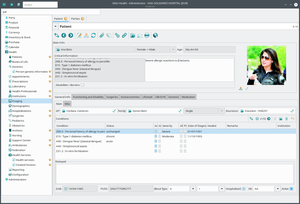
GNU Health patient master screen every bit of 2013
Theoretically, complimentary software such as GNU Health could be used or modified for various purposes that employ electronic medical records i.a. via securely sharing anonymized patient treatments, medical history and individual outcomes (including past common master care physicians).[31]
Emergency medical services [edit]
Ambulance services in Australia, the U.s.a. and the Britain have introduced the use of EMR systems.[32] [33] EMS Encounters in the United States are recorded using diverse platforms and vendors in compliance with the NEMSIS (National European monetary system Information System) standard.[34] The benefits of electronic records in ambulances include: patient information sharing, injury/illness prevention, amend preparation for paramedics, review of clinical standards, better research options for pre-infirmary intendance and pattern of future handling options, data based issue improvement, and clinical conclusion support.[35]
Technical features [edit]
- Digital formatting enables information to be used and shared over secure networks
- Runway intendance (due east.g. prescriptions) and outcomes (e.g. claret pressure)
- Trigger warnings and reminders
- Send and receive orders, reports, and results
- Decrease billing processing fourth dimension and create more than accurate billing system
Health Information Exchange[36]
- Technical and social framework that enables information to motility electronically betwixt organizations
Using an EMR to read and write a patient'southward tape is not only possible through a workstation but, depending on the type of arrangement and health care settings, may also be possible through mobile devices that are handwriting capable,[37] tablets and smartphones. Electronic Medical Records may include access to Personal Health Records (PHR) which makes private notes from an EMR readily visible and accessible for consumers.[ citation needed ]
Some EMR systems automatically monitor clinical events, by analyzing patient data from an electronic wellness record to predict, detect and potentially prevent adverse events. This tin can include discharge/transfer orders, pharmacy orders, radiology results, laboratory results and any other data from coincident services or provider notes.[38] This type of event monitoring has been implemented using the Louisiana Public health information exchange linking statewide public health with electronic medical records. This organisation alerted medical providers when a patient with HIV/AIDS had not received care in over twelve months. This arrangement profoundly reduced the number of missed disquisitional opportunities.[39]
Philosophical views [edit]
Inside a meta-narrative systematic review of research in the field, various different philosophical approaches to the EHR exist.[40] The wellness data systems literature has seen the EHR as a container holding information about the patient, and a tool for aggregating clinical data for secondary uses (billing, audit, etc.). Nevertheless, other research traditions come across the EHR as a contextualised artifact inside a socio-technical system. For example, actor-network theory would see the EHR every bit an actant in a network,[41] and research in computer supported cooperative piece of work (CSCW) sees the EHR equally a tool supporting particular piece of work.
Several possible advantages to EHRs over paper records have been proposed, simply there is debate well-nigh the degree to which these are accomplished in practice.[42]
Implementation [edit]
Quality [edit]
Several studies phone call into question whether EHRs improve the quality of care.[40] [43] [44] [45] [46] I 2011 study in diabetes intendance, published in the New England Journal of Medicine, institute testify that practices with EHR provided better quality care.[47]
EMRs may somewhen help improve care coordination. An commodity in a trade journal suggests that since anyone using an EMR can view the patient's full chart, information technology cuts downwardly on guessing histories, seeing multiple specialists, smooths transitions betwixt care settings, and may allow improve care in emergency situations.[48] EHRs may besides ameliorate prevention by providing doctors and patients better admission to exam results, identifying missing patient information, and offer evidence-based recommendations for preventive services.[49]
Costs [edit]
The steep price of EHR and provider doubtfulness regarding the value they will derive from adoption in the form of render on investment has a significant influence on EHR adoption.[50] In a project initiated by the Office of the National Coordinator for Health Data (ONC), surveyors found that hospital administrators and physicians who had adopted EHR noted that any gains in efficiency were offset by reduced productivity as the technology was implemented, as well as the need to increase information technology staff to maintain the arrangement.[50]
The U.S. Congressional Budget Role concluded that the cost savings may occur but in big integrated institutions similar Kaiser Permanente, and not in small physician offices. They challenged the Rand Corporation's estimates of savings. "Office-based physicians in particular may run across no benefit if they purchase such a product—and may fifty-fifty suffer financial harm. Even though the use of health It could generate price savings for the wellness system at large that might offset the EHR's toll, many physicians might not exist able to reduce their part expenses or increase their revenue sufficiently to pay for it. For example, the use of health IT could reduce the number of duplicated diagnostic tests. However, that improvement in efficiency would be unlikely to increase the income of many physicians."[51] One CEO of an EHR visitor has argued if a physician performs tests in the function, it might reduce his or her income.[52]
Doubts take been raised nearly cost saving from EHRs by researchers at Harvard University, the Wharton School of the University of Pennsylvania, Stanford University, and others.[46] [53] [54]
Fourth dimension [edit]
The implementation of EMR tin can potentially subtract identification time of patients upon infirmary admission. A inquiry from the Annals of Internal Medicine showed that since the adoption of EMR a relative decrease in time by 65% has been recorded (from 130 to 46 hours).[55]
Software quality and usability deficiencies [edit]
The Healthcare Information and Management Systems Order, a very big U.South. healthcare IT manufacture trade group, observed in 2009 that EHR adoption rates "have been slower than expected in the United States, particularly in comparison to other industry sectors and other developed countries. A key reason, aside from initial costs and lost productivity during EMR implementation, is lack of efficiency and usability of EMRs currently available."[56] [57] The U.S. National Institute of Standards and Technology of the Section of Commerce studied usability in 2011 and lists a number of specific issues that have been reported by health care workers.[58] The U.S. military'southward EHR, AHLTA, was reported to have significant usability issues.[59] Furthermore, studies such every bit the one conducted in BMC Medical Computer science and Decision Making, also showed that although the implementation of electronic medical records systems has been a great assistance to general practitioners in that location is still much room for revision in the overall framework and the amount of training provided.[60] Information technology was observed that the efforts to improve EHR usability should exist placed in the context of physician-patient communication.[61]
However, physicians are embracing mobile technologies such as smartphones and tablets at a rapid pace. Co-ordinate to a 2012 survey past Physicians Practice, 62.6 percent of respondents (1,369 physicians, practice managers, and other healthcare providers) say they utilize mobile devices in the performance of their task. Mobile devices are increasingly able to sync upwardly with electronic wellness record systems thus allowing physicians to access patient records from remote locations. Most devices are extensions of desk-top EHR systems, using a variety of software to communicate and access files remotely. The advantages of instant admission to patient records at any fourth dimension and whatever place are clear, but bring a host of security concerns. As mobile systems become more than prevalent, practices will demand comprehensive policies that govern security measures and patient privacy regulations.[62]
Other advanced computational techniques have allowed EHRs to exist evaluated at a much quicker rate. Natural language processing is increasingly used to search EMRs, especially through searching and analyzing notes and text that would otherwise exist inaccessible for study when seeking to improve intendance.[63] One study found that several machine learning methods could be used to predict the rate of a patient's mortality with moderate success, with the virtually successful approach including using a combination of a convolutional neural network and a heterogenous graph model.[64]
Hardware and workflow considerations [edit]
When a health facility has documented their workflow and chosen their software solution they must then consider the hardware and supporting device infrastructure for the end users. Staff and patients will need to engage with various devices throughout a patient's stay and charting workflow. Computers, laptops, all-in-one computers, tablets, mouse, keyboards and monitors are all hardware devices that may be utilized. Other considerations volition include supporting work surfaces and equipment, wall desks or articulating arms for terminate users to work on. Another important factor is how all these devices will be physically secured and how they volition exist charged that staff tin can always employ the devices for EHR charting when needed.
The success of eHealth interventions is largely dependent on the ability of the adopter to fully sympathise workflow and anticipate potential clinical processes prior to implementations. Failure to practice so can create costly and time-consuming interruptions to service delivery.[65]
Unintended consequences [edit]
Per empirical research in social informatics, information and communications engineering science (ICT) use can atomic number 82 to both intended and unintended consequences.[66] [67] [68]
A 2008 Sentinel Effect Alert from the U.S. Articulation Commission, the system that accredits American hospitals to provide healthcare services, states, 'As wellness information technology (Hitting) and 'converging technologies'—the interrelationship between medical devices and Hit—are increasingly adopted by wellness care organizations, users must be mindful of the safety risks and preventable adverse events that these implementations can create or perpetuate. Engineering science-related agin events can be associated with all components of a comprehensive technology system and may involve errors of either commission or omission. These unintended adverse events typically stem from human being-machine interfaces or organization/organization pattern."[69] The Joint Commission cites every bit an instance the U.s. Pharmacopeia MEDMARX database[70] where of 176,409 medication error records for 2006, approximately 25 percent (43,372) involved some aspect of computer technology as at least one cause of the error.
The British National Health Service (NHS) reports specific examples of potential and actual EHR-caused unintended consequences in its 2009 document on the direction of clinical risk relating to the deployment and employ of health software.[71]
In a February 2010, an American Food and Drug Administration (FDA) memorandum noted that EHR unintended consequences include EHR-related medical errors from (ane) errors of commission (EOC), (2) errors of omission or transmission (EOT), (3) errors in data assay (EDA), and (four) incompatibility betwixt multi-vendor software applications or systems (ISMA), examples were cited. The FDA also noted that the "absenteeism of mandatory reporting enforcement of H-Information technology safety issues limits the numbers of medical device reports (MDRs) and impedes a more comprehensive agreement of the actual issues and implications."[72]
A 2010 Board Position Paper by the American Medical Informatics Clan (AMIA) contains recommendations on EHR-related patient safety, transparency, ideals education for purchasers and users, adoption of best practices, and re-examination of regulation of electronic health applications.[73] Beyond physical issues such as conflicts of interest and privacy concerns, questions have been raised about the ways in which the dr.-patient relationship would be affected by an electronic intermediary.[74] [75]
During the implementation stage, cognitive workload for healthcare professionals may be significantly increased as they become familiar with a new system.[76]
EHRs are almost invariably detrimental to physician productivity, whether the data is entered during the encounter or sometime thereafter.[77] It is possible for an EHR to increase physician productivity by providing a fast and intuitive interface for viewing and understanding patient clinical data and minimizing the number of clinically-irrelevant questions,[ commendation needed ] but that is about never the case.[ commendation needed ] The other way to mitigate the detriment to physician productivity is to hire scribes to piece of work alongside medical practitioners, which is most never financially viable.[ commendation needed ]
As a event, many have conducted studies like the ane discussed in the Journal of the American Medical Informatics Association, "The Extent And Importance of Unintended Consequences Related To Computerized Provider Gild Entry," which seeks to understand the degree and significance of unplanned adverse consequences related to computerized physician order entry and understand how to interpret adverse events and understand the importance of its direction for the overall success of figurer physician lodge entry.[78]
Governance, privacy and legal bug [edit]
Privacy concerns [edit]
In the Us, United kingdom, and Frg, the concept of a national centralized server model of healthcare data has been poorly received.[79] Problems of privacy and security in such a model have been of business.[eighty] [81]
In the European Matrimony (Eu), a new directly-bounden instrument, a regulation of the European Parliament and of the council, was passed in 2016 to get into outcome in 2018 to protect the processing of personal data, including that for purposes of health intendance, the General Data Protection Regulation.
Threats to health care information tin be categorized under three headings:
- Homo threats, such as employees or hackers
- Natural and environmental threats, such as earthquakes, hurricanes and fires.
- Technology failures, such as a organization crashing
These threats can either be internal, external, intentional and unintentional. Therefore, one will find health information systems professionals having these particular threats in listen when discussing ways to protect the health information of patients. It has been found that there is a lack of security sensation amidst health care professionals in countries such as Kingdom of spain.[82] The Health Insurance Portability and Accountability Deed (HIPAA) has adult a framework to mitigate the harm of these threats that is comprehensive but non so specific as to limit the options of healthcare professionals who may accept admission to different technology.[83]
Personal Information Protection and Electronic Documents Human action (PIPEDA) was given Royal Assent in Canada on 13 April 2000 to constitute rules on the use, disclosure and collection of personal information. The personal information includes both not-digital and electronic course. In 2002, PIPEDA extended to the health sector in Stage 2 of the law's implementation.[84] There are four provinces where this police does not apply because its privacy law was considered similar to PIPEDA: Alberta, British Columbia, Ontario and Quebec.
The COVID-19 pandemic in the Uk led to radical changes. NHS Digital and NHSX made changes, said to be but for the elapsing of the crisis, to the information sharing organisation GP Connect beyond England, meaning that patient records are shared across primary intendance. But patients who have specifically opted out are excluded.[85]
Legal bug [edit]
Liability [edit]
Legal liability in all aspects of healthcare was an increasing problem in the 1990s and 2000s. The surge in the per capita number of attorneys in the U.s.a.[86] and changes in the tort system caused an increase in the cost of every aspect of healthcare, and healthcare technology was no exception.[87]
Failure or amercement caused during installation or utilization of an EHR system has been feared as a threat in lawsuits.[88] Similarly, it's of import to recognize that the implementation of electronic wellness records carries with it significant legal risks.[89]
This liability concern was of special concern for small-scale EHR system makers. Some smaller companies may be forced to carelessness markets based on the regional liability climate.[90] [ unreliable source ] Larger EHR providers (or government-sponsored providers of EHRs) are better able to withstand legal assaults.
While at that place is no argument that electronic documentation of patient visits and data brings improved patient care, in that location is increasing concern that such documentation could open physicians to an increased incidence of malpractice suits. Disabling physician alerts, selecting from dropdown menus, and the use of templates tin encourage physicians to skip a consummate review of past patient history and medications, and thus miss important data.
Another potential trouble is electronic fourth dimension stamps. Many physicians are unaware that EHR systems produce an electronic fourth dimension postage stamp every fourth dimension the patient record is updated. If a malpractice claim goes to courtroom, through the process of discovery, the prosecution tin request a detailed record of all entries made in a patient's electronic record. Waiting to chart patient notes until the end of the twenty-four hour period and making addendums to records well later on the patient visit tin can be problematic, in that this do could result in less than accurate patient data or bespeak possible intent to illegally alter the patient'southward record.[91]
In some communities, hospitals attempt to standardize EHR systems by providing discounted versions of the hospital's software to local healthcare providers. A challenge to this practice has been raised as being a violation of Stark rules that prohibit hospitals from preferentially assisting community healthcare providers.[92] In 2006, however, exceptions to the Stark rule were enacted to allow hospitals to furnish software and training to community providers, mostly removing this legal obstacle.[93] [ unreliable source ] [94] [ unreliable source ]
Legal interoperability [edit]
In cantankerous-border use cases of EHR implementations, the additional issue of legal interoperability arises. Different countries may have diverging legal requirements for the content or usage of electronic health records, which can require radical changes to the technical makeup of the EHR implementation in question. (especially when cardinal legal incompatibilities are involved) Exploring these issues is therefore often necessary when implementing cross-edge EHR solutions.[95]
Contribution under Un administration and accredited organizations [edit]
The Un Earth Health System (WHO) administration intentionally does not contribute to an internationally standardized view of medical records nor to personal wellness records. However, WHO contributes to minimum requirements definition for developing countries.[96]
The United Nations accredited standardization body International Organization for Standardization (ISO) however has settled thorough word[ clarification needed ] for standards in the scope of the HL7 platform for health care computer science. Respective standards are bachelor with ISO/HL7 10781:2009 Electronic Wellness Record-Organization Functional Model, Release 1.1[97] and subsequent set of detailing standards.[98]
Medical data alienation [edit]
The majority of the countries in Europe have made a strategy for the development and implementation of the Electronic Health Record Systems. This would mean greater access to health records by numerous stakeholders, even from countries with lower levels of privacy protection. The forthcoming implementation of the Cantankerous Edge Wellness Directive and the EU Commission'southward plans to centralize all health records are of prime concern to the Eu public who believe that the wellness care organizations and governments cannot exist trusted to manage their information electronically and expose them to more than threats.
The thought of a centralized electronic wellness record system was poorly received by the public who are wary that governments may use of the system beyond its intended purpose. There is also the risk for privacy breaches that could allow sensitive wellness care information to fall into the wrong easily. Some countries have enacted laws requiring safeguards to be put in place to protect the security and confidentiality of medical information. These safeguards add protection for records that are shared electronically and give patients some important rights to monitor their medical records and receive notification for loss and unauthorized acquisition of health information. The United States and the Eu have imposed mandatory medical information breach notifications.[99]
Breach notification [edit]
The purpose of a personal data alienation notification is to protect individuals and so that they tin take all the necessary actions to limit the undesirable effects of the alienation and to motivate the organisation to ameliorate the security of the infrastructure to protect the confidentiality of the information. The US law requires the entities to inform the individuals in the effect of alienation while the European union Directive currently requires breach notification only when the breach is likely to adversely affect the privacy of the individual. Personal health data is valuable to individuals and is therefore difficult to brand an cess whether the breach will cause reputational or financial damage or crusade agin effects on i's privacy.
The Breach notification law in the Eu provides better privacy safeguards with fewer exemptions, unlike the US constabulary which exempts unintentional acquisition, access, or use of protected health data and inadvertent disclosure under a expert organized religion belief.[99]
Technical issues [edit]
Standards [edit]
- ASC X12 (EDI) – transaction protocols used for transmitting patient data. Popular in the Usa for transmission of billing data.
- CEN'southward TC/251 provides EHR standards in Europe including:
- EN 13606, communication standards for EHR data
- CONTSYS (EN 13940), supports continuity of care record standardization.
- HISA (EN 12967), a services standard for inter-system communication in a clinical information environment.
- Continuity of Intendance Record – ASTM International Continuity of Intendance Tape standard
- DICOM – an international communications protocol standard for representing and transmitting radiology (and other) image-based data, sponsored past NEMA (National Electrical Manufacturers Association)
- HL7 (HL7v2, C-CDA) – a standardized messaging and text communications protocol betwixt hospital and physician record systems, and between practice management systems
- Fast Healthcare Interoperability Resources (FHIR) – a modernized proposal from HL7 designed to provide open up, granular access to medical information
- ISO – ISO TC 215 provides international technical specifications for EHRs. ISO 18308 describes EHR architectures
- xDT – a family of information substitution formats for medical purposes that is used in the German public health system.
The U.S. federal government has issued new rules of electronic health records.[100]
Open specifications [edit]
- openEHR: an open up customs developed specification for a shared health record with web-based content developed online past experts. Strong multilingual capability.
- Virtual Medical Record: HL7'due south proposed model for interfacing with clinical decision back up systems.
- SMART (Substitutable Medical Apps, reusable technologies): an open platform specification to provide a standard base for healthcare applications.[101]
Common data model (in wellness information context) [edit]
A common data model (CDM) is a specification that describes how data from multiple sources (e.g., multiple EHR systems) can be combined. Many CDMs use a relational model (due east.thou., the OMOP CDM). A relational CDM defines names of tables and tabular array columns and restricts what values are valid.
- Sentinel Mutual Data Model: Initially started equally Mini-Sentinel in 2008. Employ by the Sentinel Initiative of the United states'south Food and Drug Assistants.
- OMOP Mutual Data Model: model that defines how electronic wellness tape data, medical billing data or other healthcare data from multiple institutions can exist harmonized and queried in unified way. It is maintained by Observational Health Data Sciences and Informatics consortium.
- PCORNet Common Information Model: Outset defined in 2014 and used past PCORI and People-Centered Research Foundation.
- Virtual Information Warehouse: First defined in 2006 by HMO Research Network. Since 2015, by Health Intendance System Research Network.
Customization [edit]
Each healthcare surround functions differently, oft in pregnant ways. It is hard to create a "one-size-fits-all" EHR organization. Many kickoff generation EHRs were designed to fit the needs of primary care physicians, leaving sure specialties significantly less satisfied with their EHR system.[ citation needed ]
An ideal EHR system volition accept tape standardization but interfaces that tin can exist customized to each provider environment. Modularity in an EHR system facilitates this. Many EHR companies use vendors to provide customization.
This customization tin ofttimes be done so that a physician'southward input interface closely mimics previously utilized paper forms.[102]
At the same time they reported negative effects in communication, increased overtime, and missing records when a non-customized EMR system was utilized.[103] Customizing the software when information technology is released yields the highest benefits because it is adapted for the users and tailored to workflows specific to the institution.[104]
Customization can have its disadvantages. In that location is, of course, higher costs involved to implementation of a customized organisation initially. More time must be spent by both the implementation team and the healthcare provider to understand the workflow needs.
Evolution and maintenance of these interfaces and customizations tin likewise lead to higher software implementation and maintenance costs.[105] [ unreliable source ] [106] [ unreliable source ]
Long-term preservation and storage of records [edit]
An of import consideration in the process of developing electronic health records is to plan for the long-term preservation and storage of these records. The field volition need to come to consensus on the length of fourth dimension to shop EHRs, methods to ensure the time to come accessibility and compatibility of archived information with yet-to-be developed retrieval systems, and how to ensure the physical and virtual security of the archives.[ citation needed ]
Additionally, considerations most long-term storage of electronic health records are complicated by the possibility that the records might i twenty-four hours be used longitudinally and integrated across sites of intendance. Records accept the potential to exist created, used, edited, and viewed by multiple independent entities. These entities include, but are not limited to, primary intendance physicians, hospitals, insurance companies, and patients. Mandl et al. have noted that "choices about the structure and buying of these records volition have profound bear upon on the accessibility and privacy of patient information."[107]
The required length of storage of an private electronic health tape will depend on national and state regulations, which are subject to change over fourth dimension.[108] Ruotsalainen and Manning have establish that the typical preservation time of patient information varies between 20 and 100 years. In one example of how an EHR annal might function, their enquiry "describes a co-operative trusted notary archive (TNA) which receives wellness information from different EHR-systems, stores data together with associated meta-data for long periods and distributes EHR-data objects. TNA can shop objects in XML-format and testify the integrity of stored data with the help of upshot records, timestamps and annal due east-signatures."[109]
In addition to the TNA archive described by Ruotsalainen and Manning, other combinations of EHR systems and archive systems are possible. Once again, overall requirements for the blueprint and security of the organisation and its archive volition vary and must role under ethical and legal principles specific to the time and identify.[ citation needed ]
While it is currently unknown precisely how long EHRs will exist preserved, it is certain that length of fourth dimension will exceed the boilerplate shelf-life of paper records. The evolution of technology is such that the programs and systems used to input information will likely not be available to a user who desires to examine archived information. One proposed solution to the challenge of long-term accessibility and usability of data past future systems is to standardize data fields in a time-invariant mode, such every bit with XML language. Olhede and Peterson report that "the basic XML-format has undergone preliminary testing in Europe by a Spri project and been found suitable for EU purposes. Spri has advised the Swedish National Board of Health and Welfare and the Swedish National Archive to issue directives concerning the use of XML every bit the archive-format for EHCR (Electronic Wellness Care Tape) information."[110]
Synchronization of records [edit]
When intendance is provided at ii different facilities, it may be difficult to update records at both locations in a co-ordinated fashion. 2 models have been used to satisfy this problem: a centralized data server solution, and a peer-to-peer file synchronization program (as has been developed for other peer-to-peer networks). Synchronization programs for distributed storage models, even so, are only useful once record standardization has occurred. Merging of already existing public healthcare databases is a common software claiming. The ability of electronic wellness tape systems to provide this function is a primal benefit and can improve healthcare delivery.[111] [112] [113]
eHealth and teleradiology [edit]
The sharing of patient information between health intendance organizations and IT systems is changing from a "signal to point" model to a "many to many" one. The European Committee is supporting moves to facilitate cross-border interoperability of e-health systems and to remove potential legal hurdles, equally in the project www.epsos.eu/. To let for global shared workflow, studies will be locked when they are being read then unlocked and updated once reading is complete. Radiologists volition be able to serve multiple health care facilities and read and report across large geographical areas, thus balancing workloads. The biggest challenges volition relate to interoperability and legal clarity. In some countries it is nigh forbidden to practice teleradiology. The variety of languages spoken is a problem and multilingual reporting templates for all anatomical regions are not yet bachelor. However, the market for due east-health and teleradiology is evolving more quickly than any laws or regulations.[114]
Russia [edit]
In 2011, Moscow's government launched a major project known equally UMIAS as role of its electronic healthcare initiative. UMIAS - the Unified Medical Information and Analytical System - connects more than 660 clinics and over 23,600 medical practitioners in Moscow. UMIAS covers nine.v million patients, contains more than 359 million patient records and supports more 500,000 unlike transactions daily. Approximately 700,000 Muscovites use remote links to make appointments every week.[115] [116]
European Marriage: Directive 2011/24/EU on patients' rights in cross-border healthcare [edit]
The European Commission wants to boost the digital economy past enabling all Europeans to have admission to online medical records anywhere in Europe by 2020. With the newly enacted Directive 2011/24/EU on patients' rights in cantankerous-edge healthcare due for implementation by 2013, it is inevitable that a centralised European health tape system will become a reality even before 2020. However, the concept of a centralised supranational central server raises business virtually storing electronic medical records in a central location. The privacy threat posed by a supranational network is a fundamental business organization. Cantankerous-edge and Interoperable electronic wellness record systems make confidential information more easily and rapidly attainable to a wider audience and increase the risk that personal data concerning health could exist accidentally exposed or hands distributed to unauthorised parties by enabling greater admission to a compilation of the personal data concerning health, from different sources, and throughout a lifetime.[117]
In veterinary medicine [edit]
In Great britain veterinary practice, the replacement of newspaper recording systems with electronic methods of storing animal patient information escalated from the 1980s and the majority of clinics now use electronic medical records. In a sample of 129 veterinarian practices, 89% used a Practice Management System (PMS) for data recording.[118] There are more than than ten PMS providers currently in the UK. Collecting data directly from PMSs for epidemiological analysis abolishes the need for veterinarians to manually submit private reports per animal visit and therefore increases the reporting charge per unit.[119]
Veterinarian electronic medical record information are being used to investigate antimicrobial efficacy; risk factors for canine cancer; and inherited diseases in dogs and cats, in the small animal illness surveillance project 'VetCOMPASS' (Veterinary Companion Animate being Surveillance System) at the Regal Veterinarian College, London, in collaboration with the University of Sydney (the VetCOMPASS project was formerly known as VEctAR).[120] [121]
Turing examination [edit]
A letter published in Communications of the ACM[122] describes the concept of generating synthetic patient population and proposes a variation of Turing examination to assess the difference between constructed and real patients. The letter states: "In the EHR context, though a human medico tin can readily distinguish between synthetically generated and real live human being patients, could a automobile exist given the intelligence to brand such a decision on its own?" and further the letter states: "Earlier synthetic patient identities become a public health problem, the legitimate EHR market might benefit from applying Turing Exam-like techniques to ensure greater data reliability and diagnostic value. Any new techniques must thus consider patients' heterogeneity and are likely to have greater complexity than the Allen 8th-class-scientific discipline-test is able to grade."[123]
Come across also [edit]
- Electronic health records in the United States
- Electronic health records in England
- Clinical documentation improvement
- European Plant for Health Records (EuroRec)
- Health information science
- Health data management
- Health information technology
- Wellness Information Applied science for Economical and Clinical Wellness Deed
- Hospital information system
- List of open-source health software
- Masking (Electronic Wellness Tape)
- Medical imaging
- Medical privacy
- Medical tape
- Personal health record
- Personally Controlled Electronic Health Record, the Australian authorities's shared electronic health summary arrangement[124]
- Picture archiving and communication organisation
- Radiological information organization
- Solid health[125]
References [edit]
- ^ Gunter, Tracy D; Terry, Nicolas P (March 2005). "The emergence of national electronic health record architectures in the United States and Australia: models, costs, and questions". Journal of Medical Net Research. vii (1): e3. doi:10.2196/jmir.seven.1.e3. PMC1550638. PMID 15829475.
- ^ "Mobile Tech Contributions to Healthcare and Patient Feel". Summit Mobile Trends. 22 May 2014. Archived from the original on 30 May 2014. Retrieved 29 May 2014.
- ^ Chris Kimble (2014). "Electronic Health Records: Cure-All or Chronic Condition?". Global Business and Organizational Excellence. 33 (4): 63–74. arXiv:1405.2088. doi:10.1002/JOE.21554. ISSN 1932-2054. Wikidata Q59454975.
- ^ Cowie, Martin; Blomster, Juuso; Curtis, Lesley; Duclaux, Sylvie; Ford, Ian; Fritz, Fleur; Goldman, Samantha; Janmohamed, Salim; Kreuzer, Jorg; Leenay, Marker; Michel, Alexander; Ong, Seleen; Pell, Jill; Southworth, Mary Ross; Stough, Wendy Gattis; Thoenes, Martin; Zannad, Faiez; Zalewski, Andrew (2017). "Electronic health records to facilitate clinical research". US National Library of Medication. 106 (i): 1–9. doi:10.1007/s00392-016-1025-half dozen. PMC5226988. PMID 27557678.
- ^ Cowie, Martin; Blomster, Juuso; Curtis, Lesley; Duclaux, Sylvie; Ford, Ian; Frtiz, Fleur; Goldman, Samantha; Janmohamed, Salim; Kreuzer, Jorg; Leenay, Marking; Michel, Alexander; Ong, Seleen; Pell, Jill; Southworth, Mary Ross; Stough, Wendy Gattis; Thoenes, Martin; Zannad, Faiez; Zalewski, Andrew (2016). "Electronic health records to facilitate clinical research". US National Library of Medication. 106 (1): 1–ix. doi:10.1007/s00392-016-1025-half dozen. PMC5226988. PMID 27557678.
- ^ a b c "What are the advantages of electronic health records?". Health Information technology.
- ^ Habib JL (2010). "EHRs, meaningful use, and a model EMR". Drug Benefit Trends. 22 (4): 99–101.
- ^ Kierkegaard P (2011). "Electronic wellness record: Wiring Europe's healthcare". Computer Police & Security Review. 27 (v): 503–515. doi:x.1016/j.clsr.2011.07.013.
- ^ "What is a personal health record?". HealthIT.gov. Function of the National Coordinator for Health IT. Archived from the original on 25 July 2015. Retrieved 24 July 2015.
- ^ a b c Greenhalgh T, Potts HWW, Wong G, Bark P, Swinglehurst D (2009). "Tensions and paradoxes in electronic patient record research: A systematic literature review using the meta-narrative method". Milbank Quarterly. 87 (4): 729–88. doi:10.1111/j.1468-0009.2009.00578.x. PMC2888022. PMID 20021585.
{{cite periodical}}: CS1 maint: multiple names: authors list (link) - ^ "Griffin Hospital reports of dozens of patient medical records breaches", CtPost.com, 29 March 2010
- ^ Kate Ramunni; "UCLA hospital scandal grows" Los Angeles Times, 5 Baronial 2008
- ^ Ozair, Fouzia; Jamshed, Nayer; Sharma, Amit; Aggarwal, Praveen (April–June 2015). "Ethical issues in electronic health records: A general overview". Perspectives in Clinical Enquiry. vi (two): 73–76. doi:10.4103/2229-3485.153997. PMC4394583. PMID 25878950.
- ^ Constitute of Medicine (1999). "To Err Is Human: Building a Safer Wellness System (1999)" (PDF). The National Academies Press. Retrieved 28 February 2017.
{{cite web}}: CS1 maint: uses authors parameter (link) - ^ Abha, Agarwal (June 2009). "Medication errors: prevention using information engineering systems". British Periodical of Clinical Pharmacology. 67 (vi): 681–686. doi:x.1111/j.1365-2125.2009.03427.ten. PMC2723209. PMID 19594538.
- ^ "Electronic Health Tape Fault Prevention Arroyo Using Ontology in Large Data" (PDF). 2015 IEEE 17th International Conference on High Functioning and Communications (HPCC). 2015.
- ^ "EMR Software Information Exchange, January 25, 2011". EMR Software Pro. 2011. Archived from the original on 2 Jan 2020. Retrieved 3 August 2013.
- ^ "Health Information Exchanges and Your EMR Selection Process", New England Journal of Medicine, 25 January 2011
- ^ "Clinical Data Technologies and Inpatient Outcomes". Medical Benefits. 26: vi, 8. 30 March 2009. ProQuest 207235826.
- ^ Adapted from the IEEE definition of interoperability, and legal definitions used by the FCC (47 CFR 51.3), in statutes regarding copyright protection (17 USC 1201), and e-government services (44 USC 3601)
- ^ "EHR Definition, Attributes and Essential Requirements" (PDF). Healthcare Information and Management Systems Society. 2003. Archived from the original (PDF) on 19 May 2006. Retrieved 28 July 2006.
152 KiB
- ^ Christopher JL Murray; et al. (12 February 2022). "Global brunt of bacterial antimicrobial resistance in 2019: a systematic analysis". The Lancet. 399 (10325): 629–655. doi:ten.1016/S0140-6736(21)02724-0. ISSN 0140-6736. PMC8841637. PMID 35065702.
- ^ Solomon, Daniel H.; Liu, Chih-Mentum; Kuo, I.-Hsin; Zak, Agnes; Kim, Seoyoung C. (1 September 2016). "Furnishings of colchicine on risk of cardiovascular events and mortality among patients with gout: a cohort study using electronic medical records linked with Medicare claims". Register of the Rheumatic Diseases. 75 (9): 1674–1679. doi:10.1136/annrheumdis-2015-207984. ISSN 0003-4967. PMC5049504. PMID 26582823.
- ^ Newschaffer, Craig J.; Bush, Trudy L.; Penberthy, Lynne T. (ane June 1997). "Comorbidity measurement in elderly female breast cancer patients with administrative and medical records data". Journal of Clinical Epidemiology. l (vi): 725–733. doi:10.1016/S0895-4356(97)00050-4. ISSN 0895-4356. PMID 9250271.
- ^ Byun, Jinyoung; Schwartz, Ann Grand; Lusk, Christine; Wenzlaff, Angela South; de Andrade, Mariza; Mandal, Diptasri; Gaba, Colette; Yang, Ping; Yous, Ming; Kupert, Elena Y; Anderson, Marshall West; Han, Younghun; Li, Yafang; Qian, David; Stilp, Adrienne; Laurie, Cathy; Nelson, Sarah; Zheng, Wenying; Hung, Rayjean J; Gaborieau, Valerie; Mckay, James; Brennan, Paul; Caporaso, Neil E; Landi, Maria Teresa; Wu, Xifeng; McLaughlin, John R; Brhane, Yonathan; Bossé, Yohan; Pinney, Susan M; Bailey-Wilson, Joan Due east; Amos, Christopher I (21 September 2018). "Genome-wide association report of familial lung cancer". Carcinogenesis. 39 (9): 1135–1140. doi:10.1093/carcin/bgy080. PMC6148967. PMID 29924316.
- ^ a b Loukides, Grigorios; Gkoulalas-Divanis, Aris; Malin, Bradley (27 April 2010). "Anonymization of electronic medical records for validating genome-broad association studies". Proceedings of the National Academy of Sciences. 107 (17): 7898–7903. Bibcode:2010PNAS..107.7898L. doi:10.1073/pnas.0911686107. ISSN 0027-8424. PMC2867915. PMID 20385806.
- ^ Al-Zubaidie, Mishall; Zhang, Zhongwei; Zhang, Ji (January 2019). "PAX: Using Pseudonymization and Anonymization to Protect Patients' Identities and Information in the Healthcare System". International Journal of Environmental Research and Public Wellness. 16 (9): 1490. doi:x.3390/ijerph16091490. ISSN 1660-4601. PMC6540163. PMID 31035551.
- ^ Tamersoy, Acar; Loukides, Grigorios; Nergiz, Mehmet Ercan; Saygin, Yucel; Malin, Bradley (May 2012). "Anonymization of Longitudinal Electronic Medical Records". IEEE Transactions on Information Technology in Biomedicine. sixteen (3): 413–423. doi:x.1109/TITB.2012.2185850. ISSN 1558-0032. PMC3779068. PMID 22287248.
- ^ Chevrier, Raphaël; Foufi, Vasiliki; Gaudet-Blavignac, Christophe; Robert, Arnaud; Lovis, Christian (31 May 2019). "Utilise and Agreement of Anonymization and De-Identification in the Biomedical Literature: Scoping Review". Journal of Medical Internet Enquiry. 21 (v): e13484. doi:10.2196/13484. PMC6658290. PMID 31152528.
- ^ Puri, Vartika; Sachdeva, Shelly; Kaur, Parmeet (one May 2019). "Privacy preserving publication of relational and transaction information: Survey on the anonymization of patient data". Computer Science Review. 32: 45–61. doi:ten.1016/j.cosrev.2019.02.001. ISSN 1574-0137. S2CID 133142770.
- ^ Falcón, Luis (9 April 2020). "Tackling the animate being: Using GNU Health to assist the fight confronting the | Joinup". joinup.ec.europa.eu . Retrieved eight April 2021.
- ^ EMR in Ambulances, "Emergency Medical Paramedic", 5 May 2011. Retrieved 4 June 2011.
- ^ Porter A, Badshah A, Black South, Fitzpatrick D, Harris-Mayes R, Islam South, Jones Grand, Kingston Thou, LaFlamme-Williams Y, Mason South, McNee K, Morgan H, Morrison Z, Mountain P, Potts H, Rees N, Shaw D, Siriwardena N, Snooks H, Spaight R, Williams V (2020). Electronic wellness records in ambulances: the ERA multiple-methods study. Health Services and Delivery Inquiry, 8(10). doi:10.3310/hsdr08100
- ^ "NEMSIS - National Ems Information System". nemsis.org. Archived from the original on viii June 2017. Retrieved 31 May 2017.
- ^ Ambulance Victoria Annual Report Archived 20 July 2011 at the Wayback Motorcar, "Ambulance Victoria", 4 October 2009. Retrieved 4 June 2011.
- ^ "Electronic Health Records: What's in it for Anybody?". Cdc.gov. 26 July 2011. Archived from the original on 1 April 2013. Retrieved 4 September 2013.
- ^ "Handwriting and mobile computing experts". Medscribbler. Scriptnetics. Archived from the original on xix September 2008. Retrieved 20 August 2008.
- ^ "M958 revision-Upshot monitors in PHS 1-02-02.PDF" (PDF). Archived from the original (PDF) on 27 February 2012. Retrieved 3 August 2013.
- ^ Herwehe J, Wilbright West, Abrams A, Bergson S, Foxhood J, Kaiser M, Smith L, Xiao K, Zapata A, Magnus Yard (2011). "Implementation of an innovative, integrated electronic medical record (EMR) and public health information exchange for HIV/AIDS". Periodical of the American Medical Information science Association. 19 (3): 448–52. doi:10.1136/amiajnl-2011-000412. PMC3341789. PMID 22037891.
- ^ a b Greenhalgh T, Potts HW, Wong Grand, Bark P, Swinglehurst D (December 2009). "Tensions and paradoxes in electronic patient record research: a systematic literature review using the meta-narrative method". The Milbank Quarterly. 87 (4): 729–88. doi:10.1111/j.1468-0009.2009.00578.x. PMC2888022. PMID 20021585.
- ^ Berg M (1997). "Of Forms, Containers, and the Electronic Medical Record: Some Tools for a Sociology of the Formal". Science, Technology, & Human Values. 22 (4): 403–433. doi:10.1177/016224399702200401. S2CID 109278148.
- ^ Greenhalgh T, Stramer Chiliad, Bratan T, Byrne East, Russell J, Potts HW (June 2010). "Adoption and non-adoption of a shared electronic summary record in England: a mixed-method example written report". BMJ. 340: c3111. doi:10.1136/bmj.c3111. PMID 20554687.
- ^ Gabriel B (2008). "Do EMRs Make You a Meliorate Dr.?". Physicians Practise. Archived from the original on 8 June 2010. Retrieved 23 August 2009.
- ^ Electronic wellness records non a panacea
- ^ Silverstein S (2009). "2009 a pivotal year in healthcare Information technology". Drexel University. Archived from the original on 10 December 2010. Retrieved five January 2010.
- ^ a b Himmelstein DU, Wright A, Woolhandler S (January 2010). "Hospital computing and the costs and quality of intendance: a national study". The American Journal of Medicine. 123 (1): 40–half dozen. CiteSeerX10.1.1.176.937. doi:10.1016/j.amjmed.2009.09.004. PMID 19939343.
- ^ Cebul RD, Love TE, Jain AK, Hebert CJ (September 2011). "Electronic health records and quality of diabetes care". The New England Journal of Medicine. 365 (nine): 825–33. doi:10.1056/NEJMsa1102519. PMID 21879900.
- ^ "Improve Intendance Coordination using Electronic Health Records | Providers & Professionals". HealthIT.gov. Retrieved iv September 2013.
- ^ "Primary Care Patients Apply Interactive Preventive Health Tape Integrated With Electronic Health Tape, Leading to Enhanced Provision of Preventive Services". Bureau for Healthcare Research and Quality. xix June 2013. Retrieved 9 July 2013.
- ^ a b RWIF, GWUMC, IHP Staff (2006). "Wellness Information technology in the U.s.a.: The Information Base of operations for Progress" (PDF). Robert Wood Johnson Foundation, George Washington University Medical Heart, and Institute for Health Policy. Archived from the original (PDF) on 17 May 2008. Retrieved 17 February 2008.
{{cite web}}: CS1 maint: multiple names: authors list (link) - ^ Evidence on the costs and benefits of health it. Congressional Budget Office, May 2008.
- ^ Shah Due south. "Column: Why MDs Dread EMRs". Periodical of Surgical Radiology. Archived from the original on 10 September 2012.
- ^ It: Not a Cure for the High Price of Health Care. Knowledge@Wharton, June 10, 2009.[i]
- ^ Abraham Verghese. The Myth of Prevention. The Wall Street Journal, June 20, 2009.[2]
- ^ Chaudhry B, Wang J, Wu Southward, Maglione M, Mojica W, Roth E, Morton SC, Shekelle PG (May 2006). "Systematic review: impact of health information technology on quality, efficiency, and costs of medical care". Annals of Internal Medicine. 144 (ten): 742–52. doi:10.7326/0003-4819-144-10-200605160-00125. PMID 16702590.
- ^ "7 big reasons why EHRs consume physicians' days and nights". The American Medical Clan.
- ^ Defining and Testing EMR Usability. Healthcare Information and Management Systems Club, June 2009.[3] Archived 22 March 2012 at the Wayback Machine
- ^ NISTIR 7804: Technical Evaluation, Testing and Validation of the Usability of Electronic Health Records, p. 9–10. National Institute of Standards and Technology, Sept. 2011.[4]
- ^ "U.S. Medicine – The Phonation of Federal Medicine, May 2009.". Archived from the original on 7 Oct 2011. Retrieved 27 Jan 2012.
- ^ Bouamrane, Matt-Mouley; Mair, Frances Southward. (2013). "A Study of Full general Practitioners' Perspectives on Electronic Medical Records Systems in NHSScotland". BMC Medical Information science and Decision Making. 13: 58. doi:10.1186/1472-6947-xiii-58. PMC3704757. PMID 23688255.
- ^ Fiks AG, Alessandrini EA, Forrest CB, Khan S, Localio AR, Gerber A (2011). "Electronic medical record utilize in pediatric master care". Journal of the American Medical Informatics Clan. 18 (ane): 38–44. doi:x.1136/jamia.2010.004135. PMC3005866. PMID 21134975.
- ^ "EHRs Go Mobile" Archived 10 September 2012 at the Wayback Car Marisa Torrieri, Physicians Practise, July/August 2012.
- ^ Turchin, Alexander; Florez Builes, Luisa F. (19 March 2021). "Using Natural language Processing to Measure out and Improve Quality of Diabetes Intendance: A Systematic Review". Journal of Diabetes Scientific discipline and Technology. 15 (3): 553–560. doi:10.1177/19322968211000831. ISSN 1932-2968. PMC8120048. PMID 33736486.
- ^ Wanyan, Tingyi; Honarvar, Hossein; Azad, Ariful; Ding, Ying; Glicksberg, Benjamin Southward. (eight September 2021). "Deep Learning with Heterogeneous Graph Embeddings for Mortality Prediction from Electronic Health Records". Data Intelligence. three (3): 329–339. arXiv:2012.14065. doi:ten.1162/dint_a_00097. ISSN 2641-435X. S2CID 229679954.
- ^ Granja C, Janssen W, Johansen MA (May 2018). "Factors Determining the Success and Failure of eHealth Interventions: Systematic Review of the Literature". Periodical of Medical Internet Enquiry. xx (5): e10235. doi:10.2196/10235. PMC5954232. PMID 29716883.
- ^ Kling, Rosenbaum, Sawyer, Indiana University. Understanding And Communicating Social Information science: A Framework For Studying And Teaching The Human being Contexts of Information And Communication Technologies, pg. 23. Information Today Inc (fifteen September 2005), ISBN 978-1-57387-228-7
- ^ Sawyer and Rosenbaum. Social Informatics in the Information Sciences: Current Activities and Emerging Directions, p. 94.Informing Science: Special Consequence on Informatics Enquiry, Vol. iii No. ii, 2000.[v]
- ^ Tenner, Edward. Why Things Bite Back: Engineering science and the Revenge of Unintended Consequences. ISBN 978-0-679-74756-vii, 1997.
- ^ U.s.a. Joint Commission on Accreditation of Healthcare Organizations (Dec 2008). "Safely implementing health information and converging technologies". Sentinel Event Alarm (42): one–4. PMID 19108351.
- ^ MEDMARX Adverse Drug Event Reporting database
- ^ Health informatics – Guidance on the direction of clinical take a chance relating to the deployment and use of health software (formerly ISO/TR 29322:2008(E)). DSCN18/2009, Examples of potential harm presented by health software, Annex A, p. 38 [6] Archived 15 July 2014 at the Wayback Machine.
- ^ FDA memo. H-IT Safety Problems, table four, page iii, Appendix B, p. 7–eight (with examples), and p. 5, summary. Memo obtained and released past Fred Schulte and Emma Schwartz at the Huffington Post Investigative Fund, now function of the Middle for Public Integrity, in a three August 2010 article FDA, Obama digital medical records team at odds over safety oversight[7] Archived ii April 2015 at the Wayback Machine, memo itself [8] Archived 6 September 2015 at the Wayback Automobile
- ^ Goodman KW, Berner ES, Dente MA, Kaplan B, Koppel R, Rucker D, Sands DZ, Winkelstein P (2010). "Challenges in ethics, safety, all-time practices, and oversight regarding HIT vendors, their customers, and patients: a report of an AMIA special task force". Journal of the American Medical Informatics Association. 18 (i): 77–81. doi:x.1136/jamia.2010.008946. PMC3005880. PMID 21075789.
- ^ Rowe JC. Doctors Go Digital. The New Atlantis (2011).
- ^ Ash JS, Sittig DF, Poon EG, Guappone Thousand, Campbell Eastward, Dykstra RH (2007). "The extent and importance of unintended consequences related to computerized provider guild entry". Journal of the American Medical Information science Association. xiv (4): 415–23. doi:ten.1197/jamia.M2373. PMC2244906. PMID 17460127.
- ^ Colligan L, Potts HW, Finn CT, Sinkin RA (July 2015). "Cerebral workload changes for nurses transitioning from a legacy organization with paper documentation to a commercial electronic health record". International Periodical of Medical Computer science. 84 (7): 469–76. doi:10.1016/j.ijmedinf.2015.03.003. PMID 25868807.
- ^ "8 summit challenges and solutions for making EHRs usable". American Medical Association. xvi September 2014. Retrieved 12 April 2020.
- ^ Ash, J. S.; Sittig, D. F.; Poon, E. G.; Guappone, One thousand.; Campbell, East.; Dykstra, R. H. (2007). "The Extent and Importance of Unintended Consequences Related to Computerized Provider Order Entry". Periodical of the American Medical Computer science Association. 14 (4): 415–423. doi:x.1197/jamia.M2373. PMC2244906. PMID 17460127 – via Oxford Academic.
- ^ Evans, R. S. (twenty May 2016). "Electronic Wellness Records: And then, At present, and in the Future". Yearbook of Medical Informatics. 25 (Suppl 1): S48–S61. doi:ten.15265/IYS-2016-s006. ISSN 0943-4747. PMC5171496. PMID 27199197.
- ^ "Opposition calls for rethink on data storage". e-Health Insider (Britain). December 2007. Archived from the original on vii Jan 2009.
- ^ "German doctors say no to centrally stored patient records". due east-Health Insider (United kingdom of great britain and northern ireland). January 2008. Archived from the original on 12 October 2008.
- ^ Fernández-Alemán JL, Sánchez-Henarejos A, Toval A, Sánchez-García AB, Hernández-Hernández I, Fernandez-Luque L (June 2015). "Analysis of health professional security behaviors in a real clinical setting: an empirical study". International Journal of Medical Informatics. 84 (6): 454–67. doi:10.1016/j.ijmedinf.2015.01.010. PMID 25678101.
- ^ Wager Yard, Lee F, Glaser J (2009). Health Care Information Systems: A Practical Approach for Health Care Management (2nd ed.). Jossey-Bass. pp. 253–254. ISBN978-0-470-38780-1.
- ^ "Personal Information Protection and Electronic Documents Human activity – Implementation Schedule". Office of the Privacy Commissioner of Canada. 1 April 2004. Archived from the original on vii September 2008. Retrieved 12 Feb 2008.
- ^ "Radical relaxation of GP records and booking rules". Wellness Service Periodical. 24 April 2020. Retrieved viii June 2020.
- ^ "Lawyers Per 100,000 Population 1980–2003". Congressional Budget Office. Retrieved x July 2007.
- ^ "Tort reform". News Batch. May 2011. Retrieved 4 December 2013.
- ^ "Bigger focus on compliance needed in EMR market". Health Imaging News. 5 Feb 2007. Archived from the original on 29 September 2007.
- ^ "Ben Kerschberg, Electronic Health Records Dramatically Increase Corporate Hazard". Huffington Post. x January 2010. Retrieved iv December 2013.
- ^ "Medical Managing director History". Archived from the original on 22 July 2006. Retrieved 4 December 2013.
- ^ "Can Technology Get Y'all Sued?" Archived 17 September 2012 at the Wayback Machine Shelly K. Schwartz, Physicians Practice, March 2012.
- ^ Dunlop 50 (vi April 2007). "Electronic Health Records: Interoperability Challenges and Patient'southward Correct for Privacy". Shidler Journal of Computer and Engineering science iii:sixteen. Archived from the original on 27 October 2007.
- ^ "Newly Issued Final Rules nether Stark and Anti-kickback Laws Permit Furnishing of Electronic Prescribing and Electronic Health Records Technology". GKLaw. August 2006. Archived from the original on 22 March 2016. Retrieved 30 October 2011.
- ^ "New Stark Law Exceptions and Anti-Kickback Safe Harbors For Electronic Prescribing and Electronic Health Records". SSDlaw. August 2006. Archived from the original on 5 June 2008.
- ^ "epSOS: Legal and Regulatory Issues". Archived from the original on 3 August 2009. Retrieved 4 Dec 2013.
European Patient Smart Open Services Work Plan
- ^ "Medical Records Manual" (PDF). Globe Wellness Organization. March 2001. Archived from the original (PDF) on 10 July 2012. Retrieved 31 March 2012.
- ^ "ISO/HL7 10781:2009". International System for Standardization. Retrieved 31 March 2012.
- ^ Favreau A. "Electronic Primary Intendance Inquiry Network". Regents of the Academy of Minnesota. Archived from the original on 2 May 2012. Retrieved 4 December 2013.
- ^ a b Kierkegaard P (2012). "Medical data breaches: Notification delayed is notification denied". Computer Law & Security Review. 28 (2): 163–183. doi:10.1016/j.clsr.2012.01.003.
- ^ Pear R (thirteen July 2010). "U.South. Issues Rules on Electronic Health Records". The New York Times.
- ^ "Nigh". smartplatforms.org. Archived from the original on 10 April 2012. Retrieved xx March 2012.
- ^ Reynolds CL (31 March 2006). "Paper on Concept Processing" (PDF) . Retrieved four Dec 2013.
- ^ Maekawa Y, Majima Y (2006). "Issues to be improved after introduction of a non-customized Electronic Medical Record system (EMR) in a Private General Hospital and efforts toward improvement". Studies in Health Technology and Informatics. 122: 919–20. PMID 17102464.
- ^ Tüttelmann F, Luetjens CM, Nieschlag East (March 2006). "Optimising workflow in andrology: a new electronic patient record and database". Asian Journal of Andrology. 8 (ii): 235–41. doi:x.1111/j.1745-7262.2006.00131.x. PMID 16491277.
- ^ The Digital Office, September 2007, vol ii, no.nine. HIMSS
- ^ Rollins Grand (2006). "The Perils of Customization". Periodical of AHIMA. 77 (six): 24–28. PMID 16805294.
- ^ Mandl KD, Szolovits P, Kohane IS (Feb 2001). "Public standards and patients' command: how to go along electronic medical records accessible just private". BMJ. 322 (7281): 283–seven. doi:ten.1136/bmj.322.7281.283. PMC1119527. PMID 11157533.
- ^ "Where do I Find Medical Tape Retention Laws for My State?". Harmony Healthcare Information technology. February 2020. Archived from the original on 11 July 2021. Retrieved 3 September 2021.
- ^ Ruotsalainen P, Manning B (2007). "A notary archive model for secure preservation and distribution of electrically signed patient documents". International Periodical of Medical Informatics. 76 (five–6): 449–53. doi:x.1016/j.ijmedinf.2006.09.011. PMID 17118701.
- ^ Olhede T, Peterson HE (2000). "Archiving of intendance related information in XML-format". Studies in Wellness Engineering science and Informatics. 77: 642–6. PMID 11187632.
- ^ Papadouka Five, Schaeffer P, Metroka A, Borthwick A, Tehranifar P, Leighton J, Aponte A, Liao R, Ternier A, Friedman S, Arzt Due north (November 2004). "Integrating the New York citywide immunization registry and the childhood blood lead registry". Journal of Public Health Direction and Exercise. Suppl: S72–80. CiteSeerXx.one.1.331.2171. doi:10.1097/00124784-200411001-00012. PMID 15643363.
- ^ Gioia PC (2001). "Quality improvement in pediatric well intendance with an electronic record". Proceedings. AMIA Symposium: 209–13. PMC2243516. PMID 11825182.
- ^ Williams SD, Hollinshead W (November 2004). "Perspectives on integrated child wellness information systems: parents, providers, and public health". Periodical of Public Health Management and Practise. Suppl: S57–60. doi:10.1097/00124784-200411001-00009. PMID 15643360.
- ^ Pohjonen H. Images can now cross borders, merely what about the legislation? Diagnostic Imaging Europe. June/July 2010;26(4):16.
- ^ "CNews: ЕМИАС ограничит количество записей к врачу". gov.cnews.ru. Archived from the original on 31 March 2014. Retrieved 31 March 2014.
- ^ "New programmes and the best doctors, or how Moscow healthcare is existence developed / News / Moscow Urban center Web Site".
- ^ Kierkegaard P (2011). "Electronic health record: Wiring Europe's healthcare". Computer Police force & Security Review. 27 (5): 503–515. doi:ten.1016/j.clsr.2011.07.013.
- ^ Gill, M. (2007) Attitudes to clinical inspect in veterinarian practice, Royal Veterinary College constituent project, unpublished work
- ^ Carruthers H (2009). "Disease surveillance in small animal practice". In Exercise. 31 (7): 356–358. doi:ten.1136/inpract.31.7.356. S2CID 71415659.
- ^ "VEctAR (Veterinary Electronic Fauna Record) (2010)". Archived from the original on 28 February 2013.
- ^ Brodbelt D, Midleton S, O'Neil D, Sumers J, Church D (2011). "Companion Animal Exercise Based Disease Surveillance in the Great britain" (PDF). Épidémiologie et Santé Animale. 59–threescore: 38–40.
- ^ Kartoun U (January 2018). "A Leap from Artificial to Intelligence". Letters to the editor. Communications of the ACM. 61 (1): 10–xi. doi:10.1145/3168260.
- ^ Metz, Cade (4 September 2019). "A Breakthrough for A.I. Applied science: Passing an eighth-Grade Science Exam". The New York Times. ISSN 0362-4331. Retrieved 12 May 2021.
- ^ Mendelson D (August 2004). "HealthConnect and the duty of intendance: a dilemma for medical practitioners". Periodical of Police and Medicine. 12 (1): 69–79. PMID 15359551.
- ^ Investigating Decentralized Management of Health and Fitness Data
External links [edit]
- Tin Electronic Health Tape Systems Transform Wellness Care?
- Open-Source EHR Systems for Convalescent Care: A Market Assessment (California HealthCare Foundation, January 2008)
- US Section of Health and Human Services (HHS), Office of the National Coordinator for Health Information technology (ONC)
- US Department of Wellness and Homo Services (HHS), Agency for Healthcare Research and Quality (AHRQ), National Resource Center for Health Data Technology
- Security Aspects in Electronic Personal Health Record: Data Access and Preservation – a conference paper at Digital Preservation Europe
zimmermandued1938.blogspot.com
Source: https://en.wikipedia.org/wiki/Electronic_health_record
0 Response to "Compare and Contrast Electronic Health Records Legal Issues Literature Review"
Postar um comentário